
Shopping Cart












- News
- 0 likes
- 3 views
- 0 comments
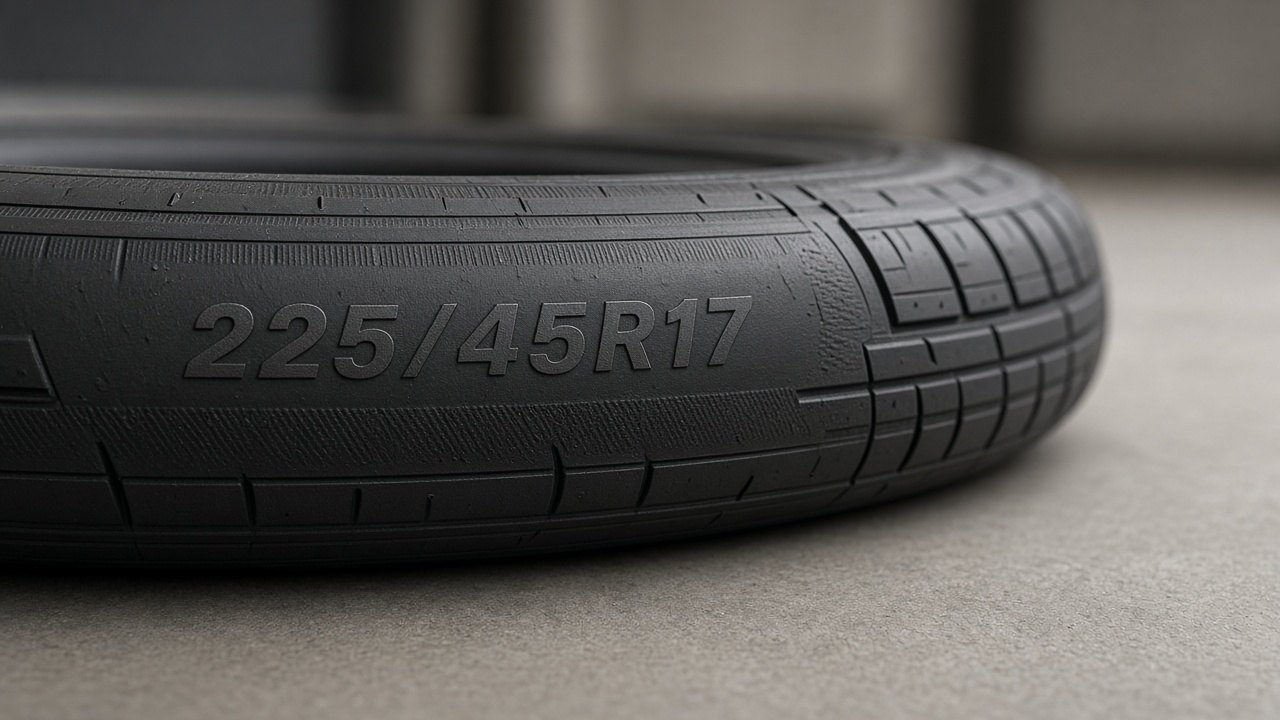
The size on the sidewall is the number that should go into the cart. A tire that looks close is not close enough. Ordering 225/45R17 when the car calls for 225/50R17 changes the ride height, the speedometer, and the way the tire sits on the rim. Use the shop-by-size tool on the homepage, or read the three groups of numbers before you open Hankook, Pirelli, or Continental.
Take 225/45R17 as the example. The first number, 225, is the section width in millimeters. The second number, 45, is the aspect ratio: the sidewall height is 45 percent of the width. The letter R means radial construction, which is what almost every modern passenger tire uses. The last number, 17, is the wheel diameter in inches. Those four details have to match the wheel on the car.
Do not trust the sidewall of a worn tire as the only source. A previous owner may have installed a different size. Open the driver door and read the placard. It lists the original size, the recommended pressure, and sometimes a spare-tire size that is not meant for everyday use. The vehicle search on the homepage is a second check: year, make, model, and trim should land on the same size as the placard.
Two more codes sit next to the size. The load index is a number that tells you how much weight one tire can carry. The speed rating is a letter that tells you the speed the tire is built to sustain. Both should meet or exceed the placard. A lower rating is not a bargain.
Once the size is confirmed, compare a model in that size. Popular starting points are the ExtremeContact DWS06 Plus, the Ventus S1 evo3, and the Cinturato P7 All Season. If you want the shop to mount them, send the set through the Installer Hub. The buying steps are covered in how to buy tires online and ship them to an installer.
Comments (0)